
Triggers in Politeness: Why ‘I’m Fine’ Can Be a Red Flag
Aug 13, 2025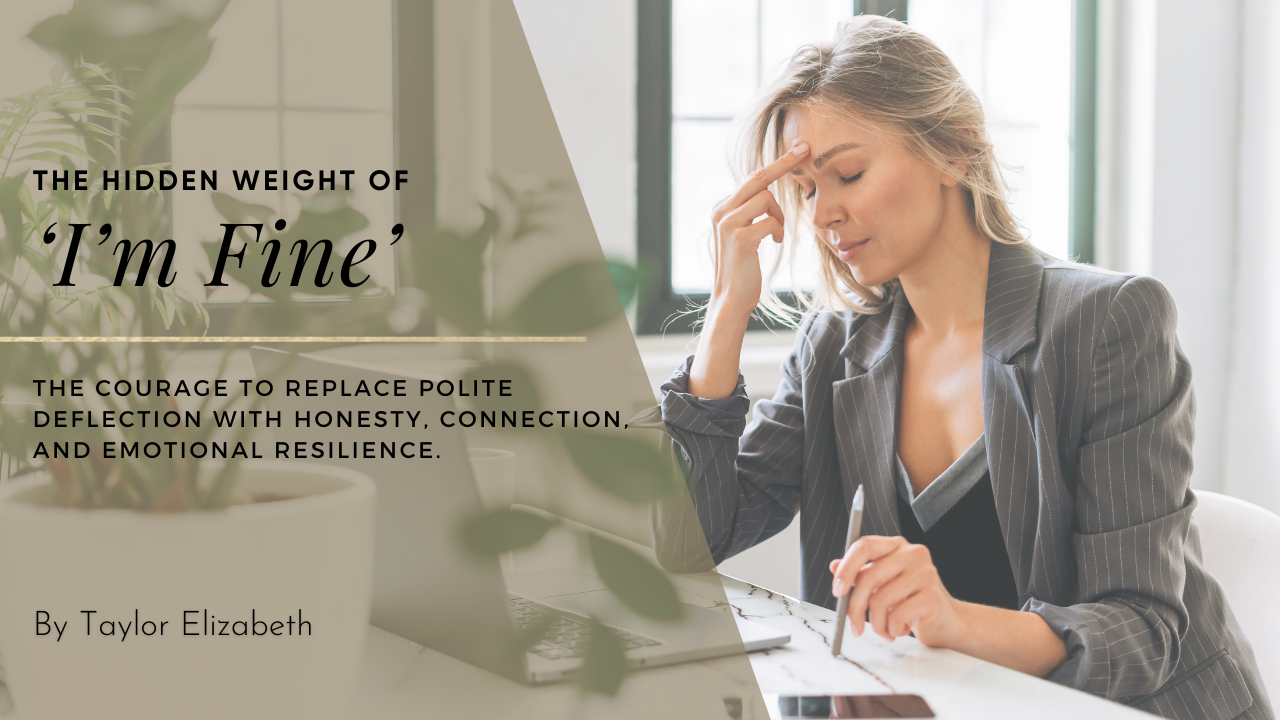
How many times have you said, "I'm fine," when you weren’t?
I know I have, more times than I can count. In moments of disappointment, frustration, sadness, or even deep pain, I’ve defaulted to those two words. They slip out so easily. They sound polite, composed, and acceptable. But they are often anything but truthful.
"I'm fine" has become a shield. It allows us to move through conversations without exposing vulnerability. It keeps things smooth and surface-level. But underneath, it often masks a wave of unspoken emotion. And while it might serve as a temporary protection, in the long run, it can lead to emotional suppression, disconnection, and a lack of self-trust.
The Core Issue: Saying "I'm fine" when we’re not is often a learned behavior. It may stem from cultural norms, social etiquette, or personal experiences that taught us it’s safer to stay quiet than be honest. Over time, this creates a pattern of emotional suppression. We begin to downplay our feelings not just with others, but also with ourselves.
Here are three emotional intelligence strategies to shift this habit:
- Practice Emotional Vocabulary Building
The more nuanced your emotional vocabulary, the easier it becomes to identify and express what you're really feeling. Start by expanding your language beyond basic words like "fine," "good," or "okay." Try: "I'm feeling a little overwhelmed," or "I'm not great, but I'm getting through it." - Create a Safe Space for Self-Expression
Whether it's journaling, voice notes, or a trusted friend, find a consistent outlet where you can be fully honest. Honoring your feelings privately strengthens your ability to eventually express them openly. - Use EQ to Sense Dissonance with Empathy, Not Pressure
When someone says "I'm fine," and you sense otherwise, approach with care. Instead of pushing them to open up, offer presence and support. Try, "I just want you to know I'm here if you ever want to talk."
Politeness has its place, but when it becomes a mask for emotional truth, it can silently erode our relationships, with others and with ourselves. Learning to move beyond "I'm fine" requires courage and practice, but the reward is authenticity, connection, and emotional resilience.
Are you ready to take the next step? I would love to stay in touch!
If this article resonated with you and you're ready to better understand your thoughts, emotions, and patterns, I'd love to support you.
If you're looking for personalized guidance, I invite you to explore my 1:1 coaching, where we'll work together to develop greater self-awareness, emotional intelligence, and lasting confidence. Simply visit my coaching page to learn more and book a consultation.
Or, if you'd prefer to learn within a guided community, my new signature program will be opening for enrollment soon.
Leave your name and email below to join the waitlist and be among the first to hear when enrollment opens. You'll receive early access, program updates, and practical insights to support your personal growth along the way.
I look forward to supporting you on your journey.
— Taylor Elizabeth | Founder, The Elegance Advisor™
The Elegance Advisor Consultancy will never send you SPAM or sell your information, for any reason.
